
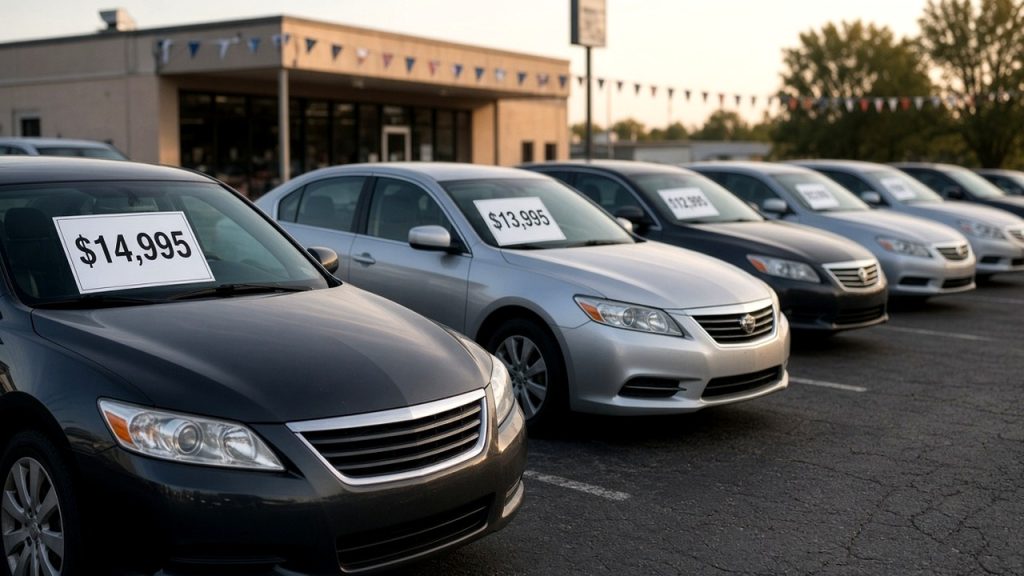
If you run Google Vehicle Ads for dealers on an independent used-car lot, Merchant Center is no longer shy about mismatches. Google compares the vehicle attributes in your feed with what sits on each vehicle detail page. When price, mileage, VIN, condition, or availability disagree, listings get warnings, lose rank, or get disapproved. That is a retail website and ads problem you can fix this week, not a wholesale index story.
Google documented this check when Merchant Center began surfacing Vehicle ads data quality issues in the account issues UI (rolled out from mid-April 2026). The same mismatch rules still decide whether a shopper who taps your ad lands on a VDP that matches the car Google showed. Independent dealers who treat the website as the source of truth and push the feed from that inventory win. Dealers who edit the portal one day and the lot site three days later pay for clicks that bounce.
This guide is operator work for a 40–150 car independent store: how Google Vehicle Ads expect your feed and VDP to line up, what to audit in two hours, and how to keep sold cars and price moves from breaking ads again. It is not legal advice and it is not a substitute for your FTC price-transparency checklist (we covered the Sept. 15 FAQs separately). Soft CTA at the end points to a same-day dealer website workflow if you want inventory and pages in one place.
What Google Vehicle Ads actually check on your lot site
Vehicle ads pull make, model, year, price, mileage, images, and dealer name into a shopper-facing unit on Google. The click goes to your VDP. Google’s own help for Vehicle ads data quality is blunt: it evaluates submitted vehicle data and the associated website content for every vehicle uploaded to the account. Mismatches between the data source and the landing page are the failure mode.
Common disapprovals and warnings for used inventory include:
- Price mismatch: feed price does not match the most prominent price on the VDP
- Mileage mismatch: feed mileage does not match the VDP (Google also allows only a small tolerance band on some checks)
- Availability mismatch: feed says in stock while the VDP looks sold, missing, or unclear
- Condition mismatch: feed says used while the page language disagrees
- VIN / brand / model mismatch: identifiers do not match the page
- Landing page errors: bad link, SRP instead of a single-car VDP, robots block, or Business Profile site mismatch
Google’s vehicle listings troubleshooting also pushes freshness: refresh the feed often (their guidance has long recommended uploads on the order of every four hours) because stale inventory expires. For an independent lot, that means your DMS/website export cannot be a Monday-only chore if you spend money on Performance Max or Shopping with a vehicle data source attached.

Why independents fail Google Vehicle Ads more often than they think
Franchise groups often inherit a feed vendor, a scheduled export, and someone whose job is Merchant Center. Many independents still run a stack like this:
- Lot site price edited by the owner on Tuesday afternoon
- Marketplace portals with their own “internet price” fields
- A vehicle feed file or third-party connector that still holds Monday’s number
- Salespeople texting a third number by Thursday
Google Vehicle Ads punish that stack. The ad shows $18,995. The VDP shows $19,495 because someone updated the site after the last feed push. Or the reverse: the feed still has a live VIN after the car delivered Saturday. Google’s price-mismatch help warns that when shoppers click an ad and see a different price, you paid for a wasted click and risk account warnings. Availability failures are worse: the shopper lands on a sold page or an SRP, and Google learns your VDPs are unreliable.
Payment-sensitive shoppers compound the problem. They already compare three tabs before they call. If Google’s card and your VDP disagree on price or miles, you lose the appointment before the BDC dials.
Applicability this week: what you can change on the lot site and in ads
Pass this test before you spend another hour on theory: can you change something on the lot site, VDP, inventory feed, or ads this week? For Google Vehicle Ads, yes.
- Align hero price on every live VDP with the cash price you will honor (mandatory dealer fees in if that is how you advertise; keep government charges out of the hero number per your FTC process)
- Re-export or push your Merchant Center vehicle data source after those edits
- Remove sold and delivered VINs the same day from site and feed
- Show VIN, mileage, condition, and availability in plain view on each VDP so Googlebot and shoppers see the same facts
- Confirm each feed link points at a unique, crawlable VDP URL, not a search grid
That is retail independent used-dealer work. It does not require reading a wholesale auction print.
Two-hour Google Vehicle Ads audit for a 50–150 car lot
Block two hours. Open Merchant Center account issues filtered to Vehicle ads. Open your live inventory on your own domain. Keep a notepad of VINs.
1. Pull the mismatch list first
Start in Merchant Center (and Google Ads diagnostics if you use them). Download or note every VIN with price, mileage, availability, condition, or landing-page issues. Do not random-walk the lot. Fix what Google already flagged, then spot-check your top traffic cars.
2. Fix the VDP before you touch the feed
For each flagged VIN, open the public VDP on your phone:
- Is the hero price the walk-in cash price you mean?
- Is mileage visible without opening a PDF?
- Does the page say the car is available, pending, in transit, or sold?
- Is the VIN on the page?
- Do photos look like the actual unit (used cars rarely match stock art)?
Edit the website first. Google’s price-mismatch article tells advertisers to update the vehicle description page and product data together. If you only patch the feed, the next crawl still sees the old VDP and you bounce between warnings.

3. Push one clean feed from the same source of truth
After VDPs are correct, regenerate the vehicle data source from the same inventory system that powers the site. Kill one-off CSV edits that only live on someone’s laptop. Confirm required attributes for used units: VIN, title, link, image link, price, condition=used, brand, model, year, mileage, and the store / fulfillment fields your setup needs.
If a vendor manages the feed, send them the VIN list and require a same-day re-upload. Do not wait for the weekly “feed meeting.”
4. Kill sold cars the same day
Google’s invalid-VDP guidance calls out pages that show the vehicle is no longer available, search grids that replace a sold VDP, and URLs that no longer resolve. Independents often leave sold units live for “call for similar.” That habit burns Google Vehicle Ads trust and shopper trust. Mark sold on the site, drop the VIN from the feed, and let marketplace catalogs follow the same day.
5. Match Business Profile and crawl rules
Vehicle ads expect the VDP domain to line up with the Google Business Profile website (or accepted forwarding). Robots.txt that blocks Googlebot on inventory paths will invalidate VDPs even when humans can see the page. Quick checks:
- Business Profile primary website matches the domain shoppers use
- Inventory and image paths are crawlable
- Each feed row uses a stable, unique VDP URL (no shared template URL for every car)
6. Align price language with how you advertise elsewhere
Google cares that the feed price matches the prominent VDP price. Your FTC process cares that the advertised price is the actual price a consumer can pay, excluding only government-required charges. Run both checks on the same hero number. If the VDP hero is a teaser and the desk needs a doc fee to get to the real number, you are fighting both Google and the FTC FAQs at once. Fix the hero number once; reuse it in Google Vehicle Ads, marketplaces, and social catalogs.

Dealer examples: three Google Vehicle Ads failures we see on independents
Example A: The portal special that undercuts the lot site. Facebook catalog and Cars.com show $16,500. The dealer website VDP still shows $16,995 because someone edited only the portals. The Google feed follows the website (correct) while paid social follows the portal (wrong), or the reverse. Shoppers screenshot both. Fix: one retail ask in inventory, site first, then every feed including Google Vehicle Ads.
Example B: The sold truck that still earns impressions. A late-model pickup delivers Saturday. The VDP stays up through Monday with “call for availability” soft language. Merchant Center still has the VIN as in stock. Google serves the ad; the click lands on a page that smells sold. Fix: same-day sold status on the VDP and feed removal before Monday spend.
Example C: The mileage update that never left the desk. A recon tech updates odometer after a pre-delivery inspection. The CRM note changes. The public VDP and Google feed still show the acquisition miles. Google flags a mileage mismatch. Fix: mileage is a website field, not a sticky note. Update VDP and re-export feed in the same sitting.
A weekly operating rhythm Google’s help pages skip
Google’s public help pages explain attributes and mismatch types. They do not tell a 80-car independent how to staff the work. Use a simple cadence:
- Daily (10 minutes): Remove sold/delivered VINs from site and confirm feed drop. Skim Merchant Center for new Vehicle ads issues.
- Every price move: Edit VDP first, then push Google and marketplace feeds the same day. No orphan portal edits.
- Twice weekly: Spot-check top 20 VDP-view VINs on phone: price, miles, VIN, photos, availability label.
- Weekly (30 minutes): Confirm Business Profile NAP and website URL, feed upload success, and that Performance Max / Shopping still has the vehicle data source attached.
Stores that already reprice on a 5–7 day cadence for retail turn can add a Google Vehicle Ads check to that meeting: which live VINs disagree between site and feed.
Photos and copy still matter for Vehicle ads
Invalid or blocked images keep cars out of results. Used-car shoppers expect the exact unit. Thin three-photo sets and watermarked stock hurt both Google and your own VDP conversion. Before you chase another bid strategy in Google Ads:
- Use stable image URLs that do not change on every export
- Allow Googlebot to crawl image paths
- Replace dark phone photos on slow units before you cut another $200
- Keep options, recent service, and inspection notes in plain language under the hero price
A clean VDP helps Googlebot verify the car and helps the human who clicked the ad decide to book a visit.
How this ties to your wider retail stack
Google Vehicle Ads are one channel. The same inventory truth should drive Autotrader, CarGurus, Cars.com, and Meta catalogs. When AutoVision’s mid-September retail inventory read showed dealers selling through a thinner pipeline (entering volume down more than sold volume in their Aug. 10–Sept. 9 window), the practical website lesson was freshness: scarce units need accurate pages and fast sold-status hygiene, not abandoned listings. Use that as pressure to keep feeds honest, not as permission to ignore Gross or compliance.
If you still need a walkthrough of advertised-price rules from the FTC’s Sept. 15 automobile pricing transparency FAQs, use our earlier post on FTC price transparency for dealers. Keep that work on the hero price; keep this week’s Google work on feed/VDP parity.
A seven-day plan you can run starting today
Day 1: Export Merchant Center Vehicle ads issues. List flagged VINs. Browse each public VDP on a phone.
Day 2: Correct price, mileage, VIN visibility, and availability labels on the website for flagged cars.
Day 3: Re-upload or push the vehicle data source. Confirm processing success. Request review where Google requires it after price-mismatch fixes.
Day 4: Purge sold and pending-delivery units from site and feed. Check that feed links still resolve to unique VDPs.
Day 5: Spot-check Business Profile website URL, robots.txt on inventory paths, and image crawlability.
Weekend: Click three of your own Vehicle ads (or use ad preview tools) and confirm the landing VDP matches the card. If anything disagrees, fix before Monday budget.
Where AutoFire fits
Independent dealers who keep inventory, prices, and vehicle pages in one system update the VDP and the public URL Google crawls without juggling a brochure site plus a separate feed spreadsheet. AutoFire is a same-day lot website: each car gets its own page, and you control the live price and details shoppers and Googlebot see. If you want that workflow on your own domain, start at goautofire.com. For a quick feed/VDP readiness pass, use the free Google Vehicle Listings readiness scan.
Sources
- Google Merchant Center: Vehicle listing ads data quality in account issues
- Google Merchant Center: Vehicle ads overview
- Google Ads Help: How to fix vehicle price mismatch
- Google for Developers: How to fix vehicle listings issues
- FTC: Price transparency FAQs for auto dealers (Sept. 15, 2026)
- Auto Remarketing / AutoVision used-vehicle inventory analysis (Sept. 16, 2026)