 ™
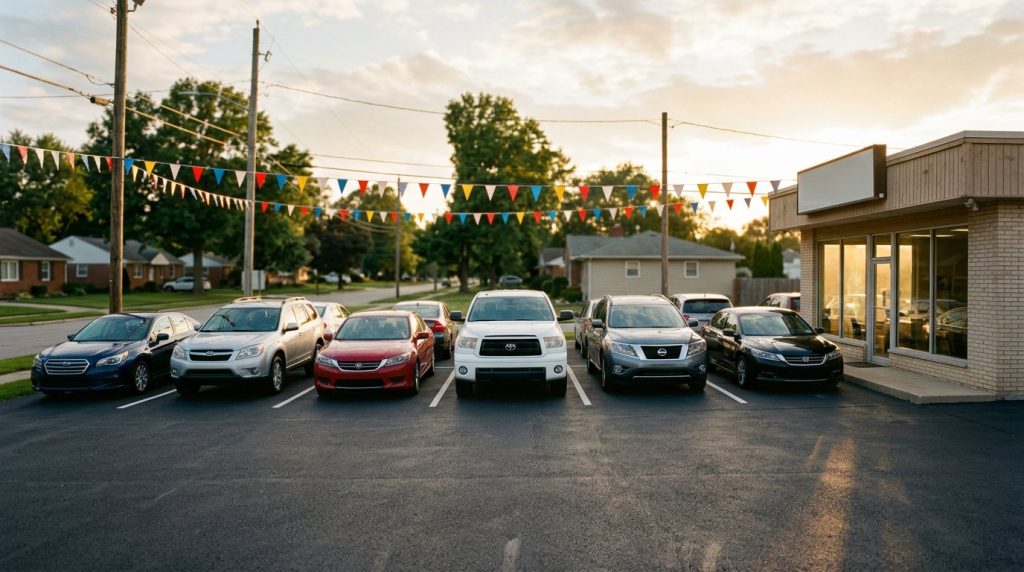

On November 9, 2026, the Federal Trade Commission filed a complaint and a stipulated order against Stream Auto Outlet, a three-store dealership group on Long Island. The core allegation is about a dealer internet price. Stream advertised cars online as an "INTERNET SPECIAL," and according to the FTC, buyers who showed up were told the real price was thousands of dollars higher, because the internet price assumed a down payment that only appeared in fine print.
If your website, your marketplace listings, or your salespeople use an "internet price," "e-price," or "web special" label, this case is a direct read on how the FTC looks at that number. Below is what the agency alleged, what the order requires, and what an independent lot can change on its vehicle detail pages, phone scripts, and fee labels this week. This is practical guidance, not legal advice, so run contract changes past your own attorney.
What the FTC says Stream Auto Outlet did
The defendants are three affiliated LLCs doing business as Stream Auto Outlet, with stores in Valley Stream, Amityville, and Islip, New York. The FTC brought one count of deceptive price advertising under Section 5 of the FTC Act, filed in the U.S. District Court for the Eastern District of New York. Stream neither admitted nor denied the allegations, and the Commission voted 2-0 to file.
The complaint, as summarized in the FTC's press release and by the attorneys who write Consumer Financial Services Law Monitor, alleges the following.
- Online listings showed an "INTERNET SPECIAL" price that assumed a down payment of several thousand dollars. One example was $3,995.
- The down payment condition sat in a small-print disclaimer that shoppers could only reach by clicking a "Details" link and getting past a popup, or that sat many screens down the listing page.
- Salespeople confirmed the advertised price by phone without mentioning the down payment.
- Buyers were required to take add-ons that were not in the advertised price, including a $4,000 warranty financed into the loan, a $1,995 "dealer prep" fee, a $2,700 LoJack product, an $895 "Theft Protection DNA" product, and a $175 doc fee.
- The doc fee was described as "State Regulated" or required by the state. New York does not require it. It is a dealer fee.
Stream had warning signs well before the lawsuit. Consumer complaints went back to at least 2022. On March 11, 2026, Stream was one of the 97 dealership groups that got an FTC warning letter saying it is illegal to advertise a price that leaves out a required down payment, leaves out required fees, depends on dealer financing, or requires extra purchases. According to the complaint, Stream's pricing stayed the same after the letter.
Christopher Mufarrige, Director of the FTC's Bureau of Consumer Protection, said price transparency "continues to be a top priority for the Trump FTC."

Why a dealer internet price with conditions attached is the problem
Plenty of dealers use an internet price the right way. It is the number the store will sell the car for to anyone who asks, set low to win the online comparison. That works as long as every buyer can get it.
The Stream complaint shows three ways an internet price stops being a real price.
- It depends on cash down. If the price only works when the buyer also pays a set amount down, the advertised number is the price minus that payment. The buyer who pays the advertised amount still owes the down payment on top, so the car costs more than the ad says.
- It depends on a product the buyer has to take. A required warranty, a "prep" charge, or an anti-theft package that every deal carries belongs in the advertised number.
- It depends on financing through the store. The March warning letter named this one directly. If a buyer paying cash or bringing an outside loan pays more, the lower price is a financing incentive, and it cannot be the headline.
The FTC's September 2026 Automobile Industry Pricing Transparency FAQs already said the advertised price must be one any consumer can walk in and pay, and that conditional discounts available only to some buyers cannot be built into it. Our walkthrough of the FTC's pricing FAQs covers the fee math. Stream adds a real case built on the down payment version, which a lot of stores never thought of as a fee problem.
Disclaimers behind a "Details" link do not fix the price
Stream's defense, according to the complaint as described by Kelley Drye's Ad Law Access blog, was that it had disclosed the extra costs. When buyers pushed back, staff pointed them to the disclaimers. Those disclaimers said pricing was "believed to be accurate" and told shoppers to contact the dealer for complete information. To find them, a shopper had to click a "Details" hyperlink, open a popup, scroll to the bottom, and read several lines of small, dense text. On other pages, the disclaimer sat several screens down, below the History Report, Original Window Sticker, Description, Basic Info, and Vehicle Details sections.
Plenty of dealer site templates put a big price at the top and a gray paragraph of legal text at the very bottom, below the equipment list. Under the Stream order, that arrangement cures nothing. The order defines a clear and conspicuous disclosure as one that is "difficult to miss," that stands out from surrounding text by "size, contrast, location, the length of time it appears," and, for anything on the internet, one that is "unavoidable." It also says the disclosure "must not be contradicted or mitigated by, or inconsistent with, anything else in the communication."
Hold your own template to that line. If the top of the page says $14,995 and a footnote says "plus $1,295 reconditioning fee," the footnote contradicts the headline. Build the fee into the headline number, then use the space below it to show the breakdown.
Changes to make on each vehicle detail page:
- Delete "believed to be accurate," "see dealer for details," and "price subject to change" boilerplate that sits under the price. They tell the shopper the number may not hold.
- Remove any popup or accordion that hides a condition on the price. If a condition exists, fix the price.
- Put the breakdown directly under the price in the same visual block: vehicle price, each dealer fee by name, and the line that says taxes, title, and registration are extra.
- Check the mobile view. A breakdown that sits next to the price on desktop can fall three swipes down on a phone, which puts you back in Stream's position.
Phone and text quotes have to match the internet price
Stream's salespeople confirmed the advertised price over the phone without mentioning the down payment, according to the complaint.
The FTC's pricing FAQs say the actual-price rule covers phone calls and text messages with dealer staff as well as ads. The Stream order goes further for audio. Any audible disclosure, "including by telephone," must be delivered at a "volume, speed, and cadence sufficient for reasonable consumers to easily hear and understand it." Whoever answers your phone needs one answer to "Is that the price?" and it has to match the page.
Write a short phone script for internet leads that says three things. The website price is the price before tax, title, and registration. It includes the doc fee and every other dealer charge. Nothing about the deal requires money down, financing through the store, or an add-on. If any of those statements is false at your store, the script will surface it in the first week. If your team quotes by text, the same three statements belong in your saved replies. Our post on dealership texting after a STOP request covers the opt-out side of those threads.

Do not call a dealer fee "state regulated"
Stream described its $175 doc fee as "State Regulated" or required by the state. According to the complaint, New York does not require that fee. Stream chose to charge it.
If your state caps doc fees or prescribes disclosure wording, that limits what you can charge and how you describe it. It does not turn the fee into a government charge or let you leave it out of the advertised price. The Stream order, like the FTC's FAQs, allows only charges a federal, state, or local government agency requires the consumer to pay to be excluded.
Check every place your doc fee has a label: the vehicle detail page template, your marketplace fee setup, the buyer's order, the window addendum, and the F&I menu. Any wording that suggests the state charges the fee or requires the dealer to charge it should come out. A plain label such as "Dealer documentation fee (charged by [Dealership name])" is harder to misread. If your state requires a specific disclosure sentence for doc fees, use that exact sentence and nothing that implies more.
"No fees" slogans only work if the deal jacket agrees
After its warning letter, Stream added "NO FEES. NO GAMES. JUST CARS." and a "No Fees Policy" to its websites while the desk kept charging the same fees. The FTC called that concealment and used it in the complaint.
If your site says "no hidden fees," "no doc fee," or "price you see is the price you pay," that claim can win shoppers when it is true and can be used against you when it is not. Before you keep it, pull the last ten signed buyer's orders and compare the cash price on each to the advertised price on the day of sale. If any deal shows a fee or product the ad did not include, either change the desk practice or take the slogan down.
What the order requires, and how it compares with October's case
Stream is the FTC's second auto pricing settlement in two months, and its order follows the same structure as the one we broke down in our post on the October Greenway Auto Group order. The main terms for Stream are below.
- Whenever Stream states any amount a consumer may pay to buy, finance, or lease a vehicle, it must disclose the "Total Price" clearly and conspicuously as the most prominently displayed item. Total Price means the maximum total price, including all mandatory fees or charges, with only government-required charges excluded.
- Stream may not misrepresent costs or terms, whether a car is available at the advertised price, whether fees or products are optional, or whether a type of financing is required.
- A third-party listing does not put Stream in violation if Stream gave the site the Total Price, asked it to display that number most prominently, and took every step within its control to make that happen.
- For five years, Stream must create and keep records including each unique ad and sales script, every pencil, four square, or desk worksheet, signed deal documents, and consumer complaints.
Kelley Drye noted that, like Greenway, the Stream order is limited to injunctive relief, with no money paid. The order still lets the FTC pose as consumers, interview employees, and take depositions to check compliance. Kelley Drye's read is that with two settlements in as many months, the FTC "seems likely to keep bringing auto pricing cases."
The two cases differ in focus. Greenway centered on administrative, delivery, and processing fees added on top of advertised prices. Stream adds three patterns many independent lots will recognize: a down payment baked into an internet special, a disclaimer hidden behind a Details link, and a phone confirmation that left out the condition.
Are other dealers already changing?
Automotive News reported on November 10 that dealers are seeing competitors adjust their advertised prices to meet the FTC's expectations, with one Texas general manager saying dealers in his market had "complied very well," while another retail executive said more enforcement was needed. Auto Finance News wrote on November 13 that dealers "must be more vigilant in including fees in advertised vehicle prices" after Stream.
The FTC also framed Stream's pricing as a competition problem, because obscured prices stop shoppers from comparing dealers. If the store down the road shows a full price and you show a conditional internet price $2,000 lower, the shopper who calls both will remember which one wasted their afternoon.
A one-week internet price fix for an independent lot
This plan fits a lot with 30 to 150 cars and one person who can edit the website.
- Monday: test five cars. Ask the desk what a cash buyer with no trade and nothing down pays, before tax and tags, on five cars across your price range. Write the answers next to the website price.
- Tuesday: fix the number. If any answer was higher, change how the website price is built so it includes every dealer fee and every product that every deal carries. Drop any down payment or in-house financing condition from the headline price.
- Wednesday: fix the page. Remove fine-print disclaimers and popups under the price. Put a short breakdown directly under the price on both desktop and mobile. Rename the label if "internet special" no longer means anything different from the price.
- Thursday: fix the phone and text answers. Give everyone who answers leads the same three-sentence script. Update saved text replies to match.
- Friday: fix fee labels and slogans. Change any "state" wording on the doc fee. Compare ten recent buyer's orders to the advertised prices, and remove any "no fees" claim the paperwork does not back up.
- Next Monday: push it to every channel. Make sure your inventory feed sends the same full price to every marketplace, and save a dated screenshot of each listing. In the Stream order, the third-party safe harbor depends on proof that the dealer sent the right number and asked the site to show it, so keep that proof.
Keep dated copies of what you changed. Both recent orders made the dealers keep five years of ads, scripts, and desk worksheets, and your own trail makes a future question easier to answer.
Where AutoFire fits
AutoFire builds retail websites for independent used-car dealers, with a page for every car and the dealer in control of the price shown on it. If your current template buries the breakdown at the bottom or forces a disclaimer popup you cannot remove, you can see how AutoFire handles dealer website pages, check a full price with the out-the-door price calculator, or book a demo to walk through your own listings.
Sources
- Federal Trade Commission, "FTC Secures Settlement with Stream Auto Outlet, Advancing Price Transparency for Auto-Buying Consumers," press release, November 9, 2026: ftc.gov
- FTC v. 324 W Merrick Ave Auto, LLC et al., Stipulated Order for Permanent Injunction and Other Relief, Case 2:26-cv-07217 (E.D.N.Y., filed November 9, 2026)
- Consumer Financial Services Law Monitor, "FTC Targets Long Island Dealer Group Over 'Internet Special' Pricing, Secures Stipulated Order Requiring Total Price Disclosure," November 11, 2026: consumerfinancialserviceslawmonitor.com
- Kelley Drye & Warren, Ad Law Access, "FTC Says Fine-Print Disclaimers Can't Fix Misleading Prices in Latest Auto Dealer Settlement," November 10, 2026: kelleydrye.com
- Automotive News, "Dealerships see rivals meeting FTC ad pricing demands, but one auto retail exec says more 'hand slapping' needed," November 10, 2026: autonews.com
- Auto Finance News, "FTC advertising settlements with dealerships set pricing precedent," November 13, 2026: autofinancenews.net
- Kirkland & Ellis, "FTC and States Signal Price Transparency Is a Top Priority," November 2026 (summary of the FTC's Automobile Industry Pricing Transparency FAQs)
